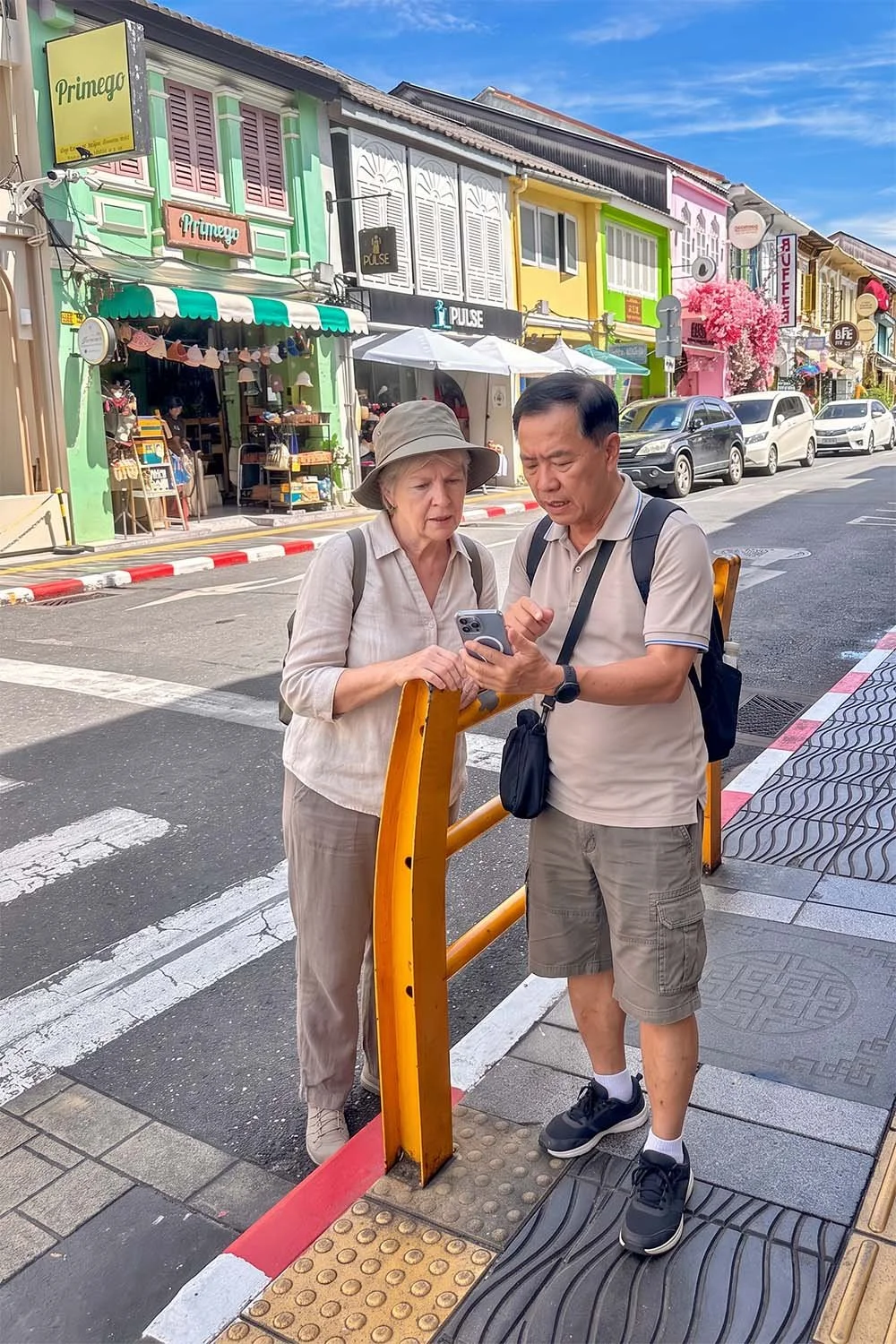
Phuket Beyond the Beaches: A Walking Guide to the Old Town
When people think of Phuket, they usually picture beaches, resorts, and long-tail boats. And fair enough. That's what brings most visitors here.
But as an expat who has lived in Thailand for many years, I've come to appreciate another side of Phuket that often gets overlooked: its Old Town.
The colourful buildings, independent shops, local restaurants, and little cafés give this neighbourhood a character quite different from the rest of the island.
It's one of those places where I'd recommend leaving your itinerary behind for a few hours and simply walking.
I usually suggest starting around Krabi Road and making your way toward Thalang Road.
The first thing you'll notice is the architecture. Rows of colourful shophouses feature arched windows, wooden shutters, decorative plasterwork, and beautifully detailed façades.
The colourful Sino-Portuguese architecture of the Old Town.
Long before Phuket became an international beach destination, the island was a prosperous tin-mining and trading centre. Chinese settlers and merchants brought traditions that gradually blended with local influences, creating the distinctive Sino-Portuguese architecture we see today.
What's interesting is that many of these buildings still function as family businesses, shops, restaurants, and homes.
If you're curious about the history, the Thai Hua Museum on Krabi Road is worth visiting. It offers a fascinating introduction to the families and cultures that helped shape Phuket.
Thalang Road and Soi Romanee
Thalang Road is probably Old Town's best-known street, and for good reason.
You'll find traditional shops alongside contemporary boutiques, galleries, and cafés. Some businesses have operated for generations, while others bring fresh ideas into the neighbourhood.
That mixture is what makes Old Town interesting to me.
Tourists pose for photos in picturesque Soi Romanee.
Just around the corner is Soi Romanee, a short lane of pastel-coloured shophouses and beautifully restored buildings. It's one of Phuket's most photographed streets, but I'd encourage visitors to spend time exploring rather than simply stopping for a picture.
Look at the small architectural details, wander into the shops, and take your time. There's usually something interesting just around the corner.
The Baba-Peranakan Influence
One of Old Town's most distinctive characteristics is its Baba-Peranakan heritage.
This culture developed through generations of Chinese settlement and interaction with local communities, creating unique traditions in clothing, food, architecture, and family life.
You can see those influences in traditional embroidered garments, decorative tiles, and historic family homes.
Many of these homes have been converted into private heritage museums where visitors see what life actually looked like behind those pastel facades. Tucked mostly along Thalang and Phang Nga Road, these quiet stops bring the island's tin-mining boom and Baba-Peranakan culture into sharp focus.
Right on Thalang Road, the Moh Seng Historic House Museum lets you wander through a remarkably deep, 150-year-old family shophouse stretching all the way back to Phang Nga Road.
The entrance to Moh Seng Historic House Museum.
Once the town's original European watch-repair shop, it is still packed with carved wooden furniture, porcelain, and vintage mechanical curiosities you can actually sit beside for photos.
Just around the corner on Krabi Road, the Phuket Thai Hua Museum occupies an airy, colonial-era former schoolhouse that unpacks the roots of local Hokkien pioneers. Its breezy galleries use interactive displays on wedding rituals and traditional dress to show how Chinese and European worlds collided here.
Looping back toward Phang Nga Road, you can visit the Peranakan Phuket Museum near the clocktower to admire intricate gold jewellery and beaded slippers, or pop into the old post office’s Philatelic Museum to see rare Siamese stamps.
The food is equally interesting. Phuket's Hokkien noodles, local desserts, and traditional dishes reflect a cultural history quite different from what many visitors expect of southern Thailand.
For me, that's one of the pleasures of living here. Even after years in Thailand, you can still discover something completely different just by visiting another region.
Handmade Design and Independent Shops
Old Town has also become a wonderful place to discover contemporary Thai creativity. Between the traditional businesses and cafés, you'll find independent retailers offering artwork, ceramics, clothing, and handmade accessories.
I have a particular appreciation for this because of my involvement with Nakamol, a Thai handmade jewellery brand with boutiques in Old Town.
Working around handmade jewellery has taught me how much patience and attention can go into something that looks relatively simple.
One of the handmade jewellery pieces I especially like.
A single necklace might combine hundreds of tiny beads, freshwater pearls, natural stones, and shells. Each element is carefully arranged to create the right balance of colour, texture, and proportion.
The jewellery is handmade in Bangkok, while the Old Town boutiques allow visitors to appreciate those details up close. t's changed the way I look at handmade products in general.
Whether it's jewellery, pottery, or embroidered fabric, I find myself paying much more attention to the workmanship behind it.
That's one reason I always encourage visitors to explore smaller independent shops. They offer another perspective on Thailand's creative culture.
The air-conditioned boutiques are a respite from the heat.
A few places are especially worth seeking out if you enjoy seeing how different craft traditions survive in everyday businesses.
On Thalang Road, Torakan is known for Baba-Peranakan clothing and fabrics. You can browse the patterned material used in traditional dress and appreciate the time and skill involved in choosing and finishing it.
On the same street, Bulan takes a different approach with indigo batik clothing. The contrast between traditional costume and contemporary fabric design says a lot about how Old Town keeps evolving.
For ceramics, Little Elephant Ceramic Art on Yaowarat Road is a fun place to browse. The modest shopfront doesn’t prepare you for the range inside: painted ceramics, textiles, masks and small handcrafted objects.
Artworks and ceramics in a shop on Thalang Road.
I particularly like the idea of slowing down to look at Benjarong-style porcelain. The patterns may look decorative from a distance, but up close you can appreciate the careful placement of colour and the small variations that come with hand painting.
It’s worth asking which pieces are actually handmade and where they come from rather than assuming every souvenir is locally produced.
If fabrics interest you, take a detour along Phang Nga Road to Chokcharoen. It’s primarily a fabric and tailoring shop rather than a tourist attraction, which is part of its charm. Browsing bolts of cotton, silk and patterned cloth is a reminder that the creative side of Phuket isn’t confined to galleries.
There are also the businesses that supply the materials and practical skills behind the clothes, gifts and accessories you see on display. For me, that everyday connection is what makes shopping in Old Town feel more interesting than walking through another generic souvenir strip.
Sunday Walking Street
If you're visiting on a Sunday, try to stay until late afternoon.
Thalang Road transforms into the Lard Yai Sunday Walking Street market, with food stalls, handmade products, local entertainment, and plenty of people enjoying the atmosphere.
The Old Town Sunday Market gets busy after dark.
The market generally starts around 4 p.m. and continues into the evening.
It can get crowded, so I suggest exploring Old Town earlier in the day, then returning when the market begins. You'll experience two very different sides of the same neighbourhood.
A Few Local Tips
Allow three or four hours to explore properly, especially if you want to stop for coffee, visit a museum, or have lunch.
Early morning is excellent for photography, while late afternoon is more comfortable for walking.
Tourists enjoy a lunchtime drink in an Old Town bar.
Don't miss Phang Nga Road and the Shrine of the Serene Light, tucked away along a passage off the street.
And definitely try some local food. Phuket's culinary traditions are every bit as interesting as its architecture.
Why I Keep Coming Back
After living in Thailand, you begin to realize that some of the best experiences aren't necessarily the big attractions everyone comes to see.
Sometimes it's an ordinary afternoon walking through a neighbourhood, discovering a small business, sampling a home-made local dessert in a coffee shop, or talking to someone about their craft.
That's what I appreciate about Phuket Old Town.
A quiet respite in one of Phuket Old Town’s coffee shops.
It's colourful without feeling manufactured, historic without being stuck in the past, and full of little discoveries.
So, if you've already enjoyed Phuket's beaches, set aside an afternoon for Old Town. Walk slowly, explore the side streets, and see what you find.
You might leave with a few photographs, a handmade keepsake, or simply a better appreciation of the island. And that's a pretty good way to spend an afternoon in Phuket.
Editor’s note: If you are unlucky to have a rainy day for your visit to the Old Town, check out this article on What to Do in Phuket in Wet Weather for some other ideas aside from the shops and museums in the Old Town.