Best Travel Destinations in Kazakhstan: A Guide for First-Time Visitors
Kazakhstan is a land of remarkable contrasts, where futuristic skyscrapers stand alongside nomadic yurts, and ancient traditions blend harmoniously with modernity. This ninth-largest country in the world is located in the heart of Eurasia, at the crossroads of great former civilisations and trade routes.
Despite its size, Kazakhstan remains one of Central Asia’s least explored destinations, making it ideal for travellers seeking authentic experiences away from well-trodden paths. Kazakhstan’s natural diversity can be breathtaking – from steppes and deserts to majestic mountain ranges, deep canyons, and crystal-clear lakes.
Here you can explore the ‘Kazakh Grand Canyon’ (Charyn Canyon), hear the ‘singing’ sand dunes in Altyn-Emel National Park, enjoy mountain landscapes around Almaty, or witness the unique sunken forest of Lake Kaindy, where spruce tree trunks stand like sentinels above turquoise waters.
For many travellers who haven’t yet visited Kazakhstan, the country is often associated with its vast steppes and harsh winter climate. But the reality is much richer and more diverse than these perceptions.
The Big Almaty Lake in late April. Image: © David Astley
You may be surprised by the developed infrastructure of major cities, especially the futuristic capital Astana with its bold architecture which in places is reminiscent of scenes from a science fiction film.
The former capital Almaty, nestled in greenery and with a picturesque backdrop of snow-capped mountains, may appeal more to older travellers as it has a more cultural atmosphere and many historic buildings.
Kazakhstan is remarkably safe for tourists, and Kazakh hospitality is renowned far beyond the country’s borders. Here, you’ll always be offered the best seat at the table and treated to kumis and national dishes.
Recently, the government has actively developed tourism initiatives, implementing safety and comfort systems for travellers, such as SafeTravel.kz, which contains useful information for tourists as well as emergency contacts.
Nauryz – the main national holiday
If you plan to visit Kazakhstan in March, you will have a chance to witness the main national holiday – Nauryz (March 21-23), the Kazakh New Year. During these days, mass celebrations, fairs, competitions in national sports, concerts, and theatrical performances are held.
The Zailiysky Alatau mountains overlook Almaty. Image: © David Astley
Yurts are set up in squares, where you can try the traditional treat – nauryz-kozhe, consisting of seven ingredients symbolizing seven elements of life. For photographers, this is an excellent opportunity to capture colourful national costumes, rituals, and traditional games.
Astana
Kazakhstan’s capital is a relatively young city that has transformed in a short time from a provincial centre into an ultra-modern metropolis with its futuristic architecture.
Here you’ll find some of the most daring and unusual architectural projects of modern times, created by world-renowned architects.
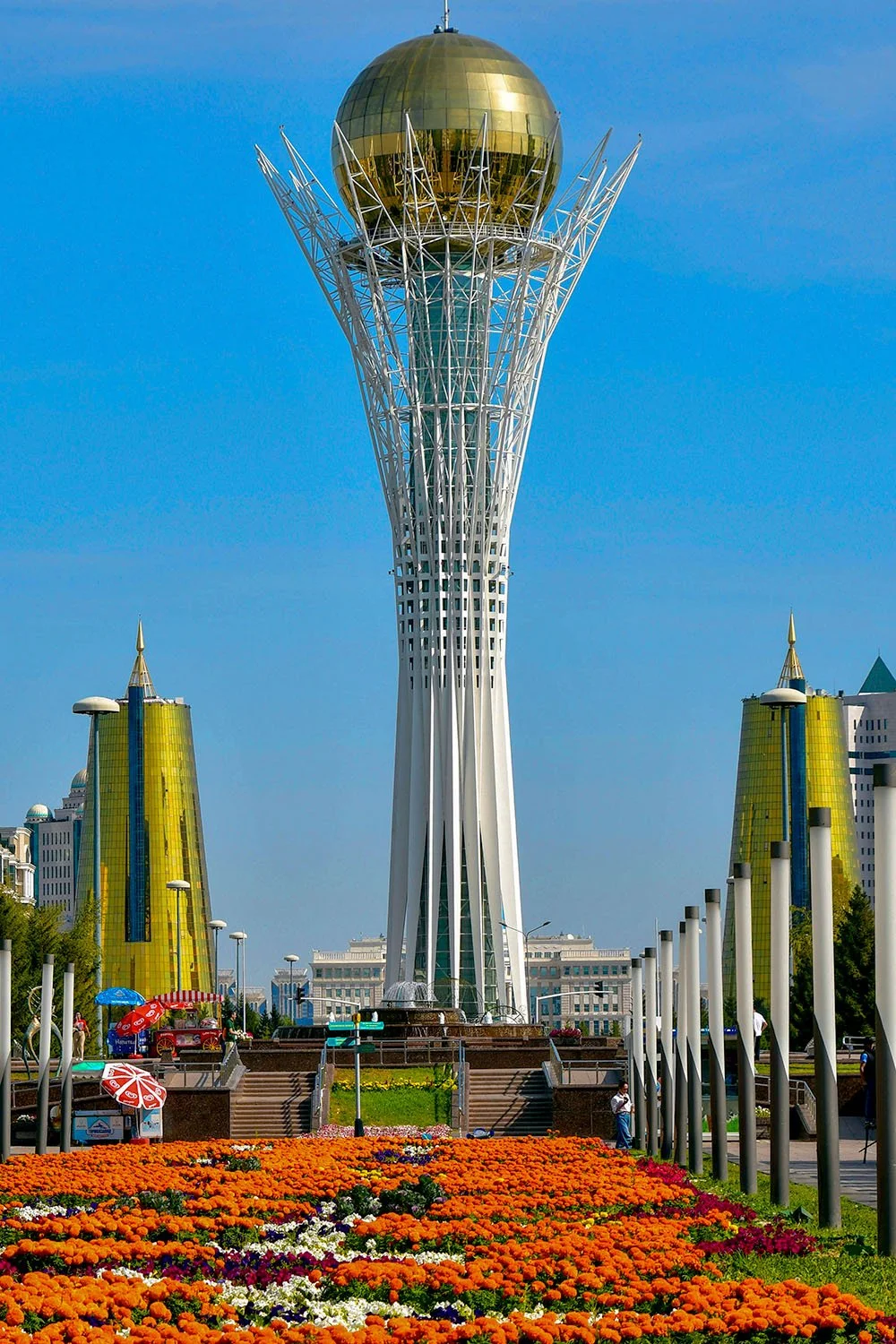
The city’s main symbol is the Baiterek monument – a 97-metre tower crowned with a golden sphere, symbolizing the mythological tree of life, where the sacred Samruk bird laid an egg between the branches.
From the observation deck, you’ll have an impressive panoramic view of the city.
Modern government buildings in Astana. Image: © Snowscat
Equally impressive are the Palace of Peace and Harmony pyramid designed by Norman Foster, the majestic Hazret Sultan Mosque – the largest in Central Asia, and the Khan Shatyr shopping centre – the world’s largest tent, with a tropical micro-climate including a beach and palm trees inside.
For accommodation in the capital, you can choose from affordable capsule hotels like the CAPS LOCK Future Hotel to comfortable mid-range hotels such as the SAAD Hotel. The city has many cafes and restaurants with diverse cuisine – from traditional Kazakh dishes to international gastronomy.
Almaty
Kazakhstan’s former capital remains the cultural and financial heart of the country. Located beneath the majestic Zailiysky Alatau mountains, Almaty attracts tourists with its combination of urban comfort and proximity to natural attractions.
One of the main city attractions is Kok-Tobe Park, located on the hill of the same name. You can take a cable car to enjoy the panorama of the city and visit its ferris wheel. In the city itself, it’s worth seeing the Central State Museum, the Ascension Cathedral – a unique wooden structure built without a single nail, and the Green Bazaar, where you can buy fresh fruits, local sweets, and souvenirs.
Almaty has many tree-lined streets. Image: © Alexander Serzhantov
Near Almaty is the high-mountain Medeo skating rink – the world’s largest outdoor ice stadium, located at an altitude of 1691m above sea level.
Slightly higher is the Shymbulak ski resort, where you can ski and snowboard from November to April. Just 28km from the city is Big Almaty Lake – a beautiful turquoise freshwater lake surrounded by majestic mountain peaks.
In Almaty, it’s recommended to stay in one of the comfortable hotels like the Almaty Park Hotel, Plaza Hotel, or SADU hotel. The city is renowned for its cafes and restaurants, where you can try both traditional Kazakh cuisine and modern gastronomic experiments.
Turkestan
The ancient city of Turkestan, located in southern Kazakhstan, has been an important centre of Islamic culture and trade for centuries.
The city’s main attraction is the Mausoleum of Khoja Ahmed Yasawi, an outstanding monument of medieval architecture and a UNESCO World Heritage Site. This majestic complex was built by order of Tamerlane in the late 14th century, honoring a Sufi saint and poet.
Today, Turkestan is experiencing a new renaissance – a modern city with developed infrastructure is being built around the historic centre. Here, you can touch centuries-old history and see how traditions merge with modernity.
The Mausoleum of Khoja Ahmed Yaswi. Image: © Harlandski
Near Turkestan are the ruins of the ancient city of Otrar, which once housed one of the largest libraries of the medieval world, as well as other historical and archaeological monuments associated with the Great Silk Road.
Natural wonders of Kazakhstan
From deep canyons resembling Martian landscapes to fairy-tale mountain lakes with sunken forests, from singing sand dunes to endless steppes and snow-capped mountain peaks – Kazakhstan’s natural diversity impresses even the most seasoned travellers.
Charyn Canyon
Located 200km east of Almaty, Charyn Canyon is one of Kazakhstan’s most impressive natural wonders.
Often called the ‘Kazakh Grand Canyon’ this comparison is quite justified –peculiar rock formations created by water and wind over millions of years resemble giant castles, towers, and columns. The most famous part of the canyon – the Valley of Castles – stretches for 2km in length and reaches 300m in depth.
The impressive Charyn Canyon. Image: © Tim Broadbent
The canyon is accessible year-round, but the best time to visit is spring (April-May) and autumn (September-October) when there’s no exhausting heat. The canyon has observation decks and hiking trails.
For the most complete experience of this natural wonder, it’s recommended to book a tour from Almaty or rent a car.
Altyn-Emel National Park
About 50km or so north of the Charyn Canyon is the Altyn-Emel National Park – one of the largest in Kazakhstan. The park’s main attraction is the Singing Dune, a 150m high sand dune that, under certain weather conditions, produces sounds resembling an organ melody or airplane hum.
This outstanding natural phenomenon is explained by the friction of sand particles against each other under the influence of wind.
Besides the Singing Dune, the park features picturesque rock formations, ancient burial mounds, rock paintings, and opportunities to observe wild animals including kulans, gazelles, and argali sheep. To visit the park, you need to obtain a permit and use the services of a guide.
Lake Kaindy and Kolsai Lakes
Further south and less than 100km east of Almaty (but requiring a 4-5 hours road trip over almost three times that distance) lies the unique Lake Kaindy in the foothills of the majestic Tien Shan mountains.
The lake was formed as a result of an earthquake in 1911. It’s famed for its sunken spruce forest – tree trunks, like ship masts, rise above the turquoise water, creating a surrealistic landscape. Due to the cold water (about 6°C in summer), the trees are perfectly preserved and have not rotted.
Horse riding around the Kolsai Lakes. Image: © Rosie Blamey
Nearby are the Kolsai Lakes – a cascade of three crystal-clear mountain lakes surrounded by coniferous forests and alpine meadows. This area is often called the ‘pearl of the Northern Tien Shan.’
Here you can hike, ride horses, or simply enjoy the pristine nature. There are guest houses and yurt camps throughout the lakes area where you can stay overnight.
Burabay National Park
About 250km north of Astana is the Burabay resort area, known as the ‘Kazakh Switzerland.’ This nature park is well-known for its coniferous forests, rocky mountains of peculiar shapes, and crystal-clear lakes.
The main Lake Burabay is surrounded by pine forests and mountains, among which stands out the Okzhetpes rock (meaning “Arrow won’t reach”), resembling a sphinx in shape.
Burabay is a popular destination for both summer (beach recreation, hiking, boating) and winter activities (skiing, ice skating, snowmobiling). The tourist infrastructure is well-developed – from yurt camps to comfortable hotels and sanatoriums with mineral springs.
Other resort areas in Kazakhstan
From sandy beaches of the Caspian Sea with warm azure water to healing salt lakes with therapeutic mud and mineral springs, Kazakhstan offers some unique wellness vacations in the heart of Eurasia, away from resorts in more popular destinations that are often overcrowded with tourists.
Aktau
The city of Aktau, located on the eastern shore of the Caspian Sea, offers an opportunity for beach recreation in the heart of Eurasia. Here you’ll find clean beaches with fine sand, a warm sea (the swimming season lasts from June to September), and developed tourist infrastructure.
Sunset over the Caspian Sea. Image: © Nurzhan Shakenov.
In addition to beach activities, near Aktau you can see the impressive natural landscapes of the Mangyshlak Peninsula – canyons, chalk mountains, underground mosques, and ancient necropolises. The unique underground mosque of Beket-ata, carved into the rock and an important pilgrimage site, deserves a visit.
There are many comfortable hotels in Aktau.
Alakol Salt Lake
Lake Alakol, located close to the Chinese border between the Almaty and East Kazakhstan regions, is known for its healing properties.
The lake’s water is salty and saturated with minerals, and the black volcanic sand on the beaches has a therapeutic effect. It’s believed that vacationing at Alakol can help with skin, respiratory, and nervous system conditions.
The tourist infrastructure around the lake is actively developing – new hotels, guest houses, and sanatoriums are being built. The best time to visit is July and August, when the water warms up enough for comfortable swimming.
Besides wellness activities, Alakol attracts bird watchers – the lake is considered an important point on the migration route of many species, including the rare relict gull.
Other unique experiences in Kazakhstan
Immerse yourself in the atmosphere of real nomadic life, falling asleep under the starry sky in a traditional yurt, tasting kumis from a wooden bowl, watching hunting with golden eagles, participating in national games and rituals – Kazakhstan offers many opportunities to touch the living culture of an ancient nomadic people who have preserved their traditions through centuries, while enjoying all the advantages of modern comfort.
Staying in a yurt
One of the most authentic experiences you can have in Kazakhstan is spending the night in a traditional yurt. Yurt camps are located in many different picturesque locations – from steppes near Astana to mountains around Almaty, and from the shores of the Caspian Sea to the Kolsai Lakes.
Traditional interior decor of a yurt. Image: © David Astley
Modern yurts are equipped for comfortable living but retain traditional interior decoration – bright hand-made carpets, wooden furniture, and national ornaments. Many yurt camps include workshops on traditional crafts, tasting of national dishes and drinks, as well as horseback riding and folklore performances in their stay programs.
Recreation and cultural activities
Kazakhstan offers many opportunities for active recreation – from hiking and horseback riding to rafting, mountain climbing, and skiing. Horse tours are especially interesting – a chance to feel like a real nomad, traveling on horseback through steppes and mountains.
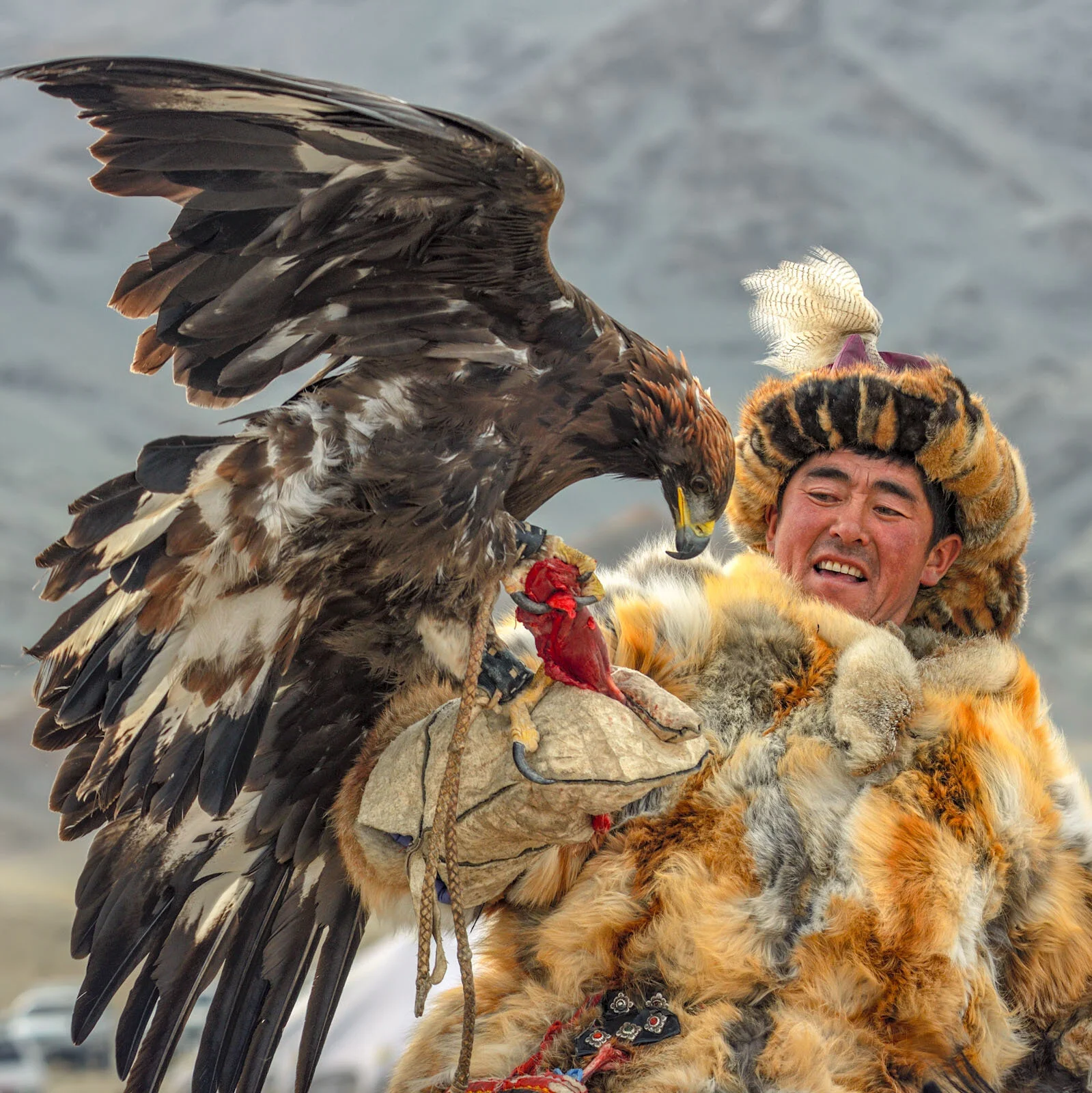
For ethnography enthusiasts, excursions to sacred places and ancient settlements, workshops on traditional crafts, and observing hunting with birds of prey – golden eagles and falcons – my be of interest. This ancient tradition is preserved in some regions of Kazakhstan and represents a unique cultural heritage.
For those interested in space travel, there’s also an opportunity to visit the Baikonur Cosmodrome – the world’s largest operating spaceport, from where the first artificial Earth satellite was launched and the first human spaceflight was made.
National cuisine
Kazakh cuisine, formed over centuries in the conditions of a nomadic lifestyle, is based predominantly on meat and dairy products. The main national dish is beshbarmak, which consists of boiled meat with thin rolled noodles and onion sauce. Traditionally, it’s prepared from horse meat or lamb.
Tasty traditional Kazakh cuisine. Image: © Eugene K.
Among other traditional dishes worth trying are kazy (horse sausage), kuyrdaq (offal stew), manti (large dumplings), sorpa (meat broth), and baursaki (fried dough balls). Popular drinks include kumis (fermented mare’s milk), shubat (from camel milk), and ayran.
In large cities, you can find restaurants specialising in traditional Kazakh cuisine, but for the most authentic experience it’s recommended to try homemade dishes in guest houses or yurt camps.
Best time to visit
Kazakhstan can be visited year-round, but the best time is considered to be from April to June and from September to November when the weather is most comfortable and nature is particularly picturesque.
Summer (July-August) is the peak tourist season, but in steppe and desert regions, it can be very hot (up to 40°C). In mountainous areas around Almaty, summers are cooler and more comfortable.
A street artist in Almaty city. Image: © David Astley
Winter in Kazakhstan is cold, especially in the northern and central regions, where temperatures can drop to -30°C. However, this is the ideal time for skiing at the Shymbulak and Butakovka resorts, ice skating at the Medeo rink, as well as for visiting winter festivals and observing unique winter landscapes.
How to get there and get around
Finding affordable tickets to Kazakhstan has become easier lately with the national carrier, Air Astana, now flying to more than 30 destinations in Asia, Europe, the Middle East, and CIS countries. Most international flights are direct to Astana or Almaty, with Aktau, Atyrau, and Shymkent also accommodating some regional flights.
From major international centres, it’s most convenient to fly via Istanbul, Dubai, Bangkok, Beijing or Seoul. Air Astana also has a twice-weekly flight from London Heathrow. Other airlines flying into Kazakhstan include Lufthansa from Frankfurt, Turkish AIrlines from Istanbul and FlyDubai from Dubai.
Internal flights between Astana and Almaty are approximately 90 minutes, while the western and more distant southern regions of Kazakhstan are 2–3 hours flying time away from the main aviation hubs.
Citizens of most European countries, the USA, Australia, Japan, South Korea, and several other nations enjoy visa-free entry for up to 30 days (for some countries, up to 90 days). Upon entry, an immigration card with a QR code is issued for access to the SafeTravel.kz portal.
Local honey on sale in a Kazakh produce market. Image: © David Astley
Within the country, you can travel by train or bus as well as by air. A high-speed train runs between Astana and Almaty (10 hours journey time), while regular trains cover this distance in 16–18 hours. Railway ticket prices range from US$12 to $25 depending on class. In recent years, roads connecting regional centres and the main tourist attractions have been improved, making car travel increasingly comfortable.
Currency and practical advice
The national currency of Kazakhstan is the tenge (KZT). The exchange rate at the time of writing was approximately 500 tenge for one US dollar. Banknotes are issued in denominations from 200 to 20,000 tenge. Currency can be exchanged at banks and exchange offices in major cities. It’s important to keep the exchange receipt if you plan to change remaining tenge back into your home currency before departure.
Credit cards are accepted in most hotels, restaurants, and shops in major cities, but when travelling to remote areas, or shopping in markets, it’s recommended to have a sufficient amount of cash.
The level of English proficiency in Kazakhstan is low, especially outside tourist areas. In major cities and among young people, you can find English speakers, but for a more comfortable journey it’s useful to learn a few basic phrases in the Kazakh language, or have an electronic translator.
Internet and mobile communications are well developed in cities but may be less accessible in remote areas. It’s recommended to purchase a local SIM card to save on roaming and to access mobile internet.
Header image: © Tim Broadbent