Driving the Mae Hong Son Loop by Car: What’s Changed for 2026/2027
I’ve been living and working as an expat in Thailand for 26 years. When you first arrive, it is easy to think the country is all about its famous beaches, yet the longer you stay, the more you realise how much else it has to offer.
The mountains of the north have always appealed to me, though my work in southern Thailand kept me away for many years. I was especially fascinated by the Mae Hong Son Loop and the stories of motorcyclists tackling the more than 3,000 curves along this scenic mountain road.
However, it wasn't until I read David Astley’s article on xyzAsia about driving the route in a rental car that I finally decided to make the trip myself.
After more than two decades of keeping the loop on my radar, I took the plunge and flew to Chiang Mai to follow David’s itinerary almost to the letter.
Because a few things have changed since he wrote his piece in 2023, I wanted to share some practical updates for anyone else thinking about making the drive.
Going Clockwise to Mae Sariang’s Teak Heritage
I followed David’s advice to do the loop in a clockwise direction, and I’m glad I did because it meant that the scenery got better every day. If I’d done it in the other direction, it would have been something of an anti-climax after the first day because the stretch between Pai and Chiang Mai has the most spectacular views.
The Mae Ya Waterfall is spectacular in the rainy season.
I did the recommended stop at the Mae Ya Waterfall and it was stunning. I was travelling in the latter part of the rainy season just after northern Thailand had experienced heavy rain (which caused devasting floods in the province of Nan) so the waterfall was at peak flow.
It’s a beautiful sight and a ‘must see’ if you are travelling after rain.
I stayed in The Teak House at Mae Sariang, a three-storey wooden property right on the Yuam River. The guest house is built entirely from solid teak poles and milled timber and enforces a strict ‘no shoes inside’ policy to protect the floors.
Because it was the off-season, I had the place to myself and didn't have to worry about footsteps creaking across the wooden floors at night. If you visit during the busier high season, packing earplugs would be a smart move.
Interior of the riverside Teak House at Mae Sariang.
If you want to book there, make sure you search for Riverhouse Hotel – The Teak House and ensure you are not accidentally booking their larger, modern concrete sister hotel just 50 metres away called the Riverhouse Resort.
Despite the possibility of enduring creaky floors, it’s definitely worth spending a night at The Teak House because teak is a big part of the local heritage there.
The town was a major hub for the northern Thai and Burmese logging industry at the turn of the 20th century, with historic wooden relics like the old Royal Forestry Department office and Shan-style monasteries still standing.
It was teeming with rain when I reached Mae Sariang and the river was running excessively high. Breakfast at The Teak House was good but there was no fresh coffee. Instead, I found a coffee shop on the way out of town called Phamolor Coffee.
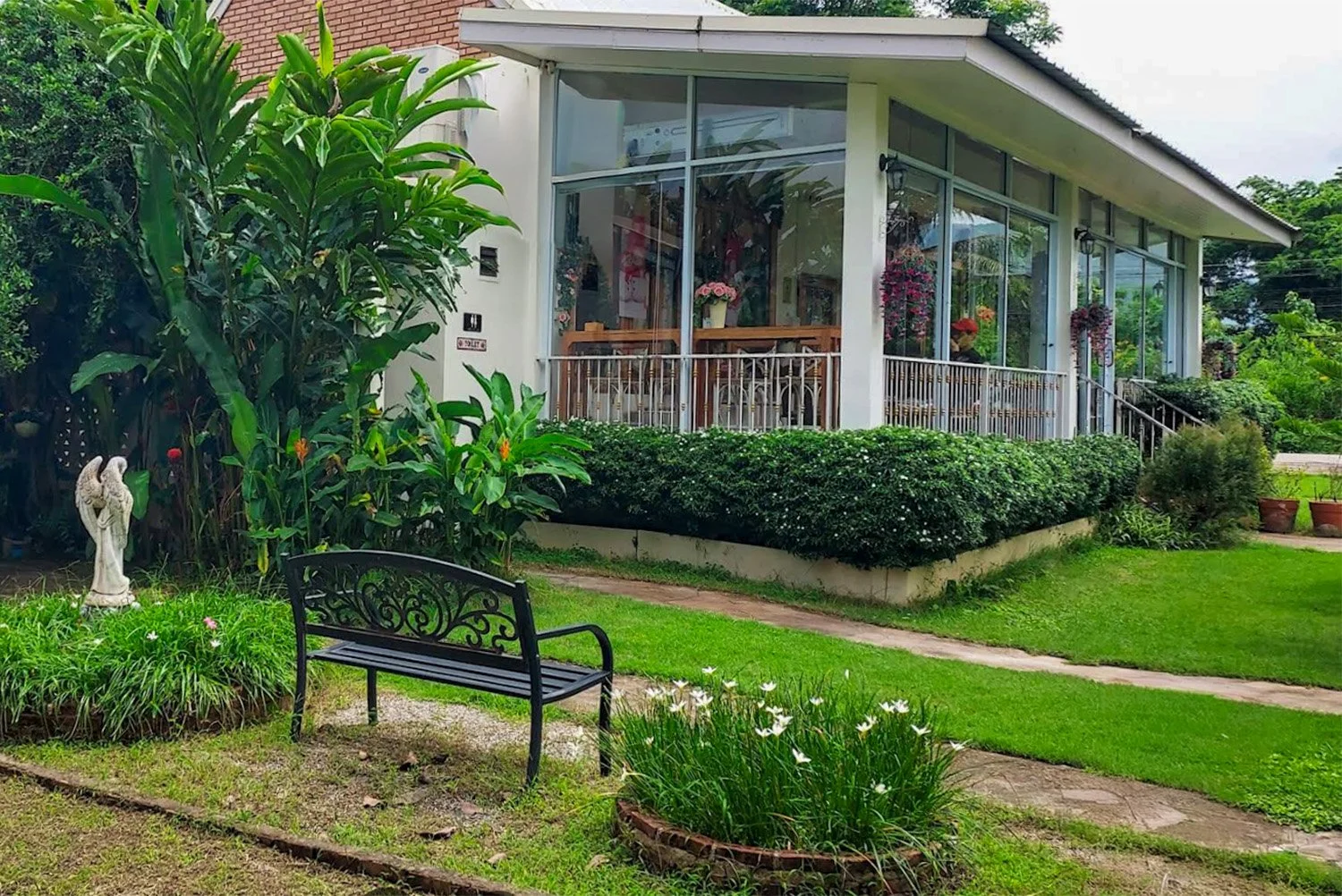
The Phamolor coffee shop was a lucky find.
It’s near the river about a kilometre from the Teak House, serves good coffee, and has lovely views over the rice fields to the mountains.
The Chinese temple at Mae Sariang is also worth a look if you have time.
The Mae La Luang Viewpoint on the way to Mae Hong Son town, that David mentioned in his article, is definitely worth a stop. It is the first of many viewpoints with spectacular views on the Mae Hong Son Loop.
Cross-Border History from Mae Hong Son to Ban Rak Thai
Wat Chong Kham, situated right on the lake in Mae Hong Son, was a very special stop for me. Because I have a deep interest in the region's history and architecture, I felt an instant connection to one of the temple buildings.
It looked remarkably like a building I had seen in the Nga Phe Chaung Monastery at Inle Lake in Myanmar, and spotting historical links like that always excites me.
It reminded me of seeing a temple in Buriram, in Thailand's eastern Isan region, that was virtually identical to one in Cambodia—a clear reminder of just how far the Khmer Empire once stretched.
Wat Chong Kham was built in 1827 by craftsmen from Burma.
Standing at Wat Chong Kham, I found myself picturing people two centuries ago traveling on foot over these rugged mountains between Myanmar and northern Thailand. In our modern era of fast air travel, discovering tangible traces of those ancient overland journeys is genuinely moving.
As I walked around the temple grounds, I came across a plaque confirming that parts of the complex had indeed been constructed by Burmese artisans. Still, it was rewarding to have recognised that shared architectural DNA before actually reading the plaque.
I stayed the night at Sang Poy Cottage near the Su Tong Pae Bridge but I found it a bit disappointing—but perhaps that was because I was the only person there and the restaurant was closed.
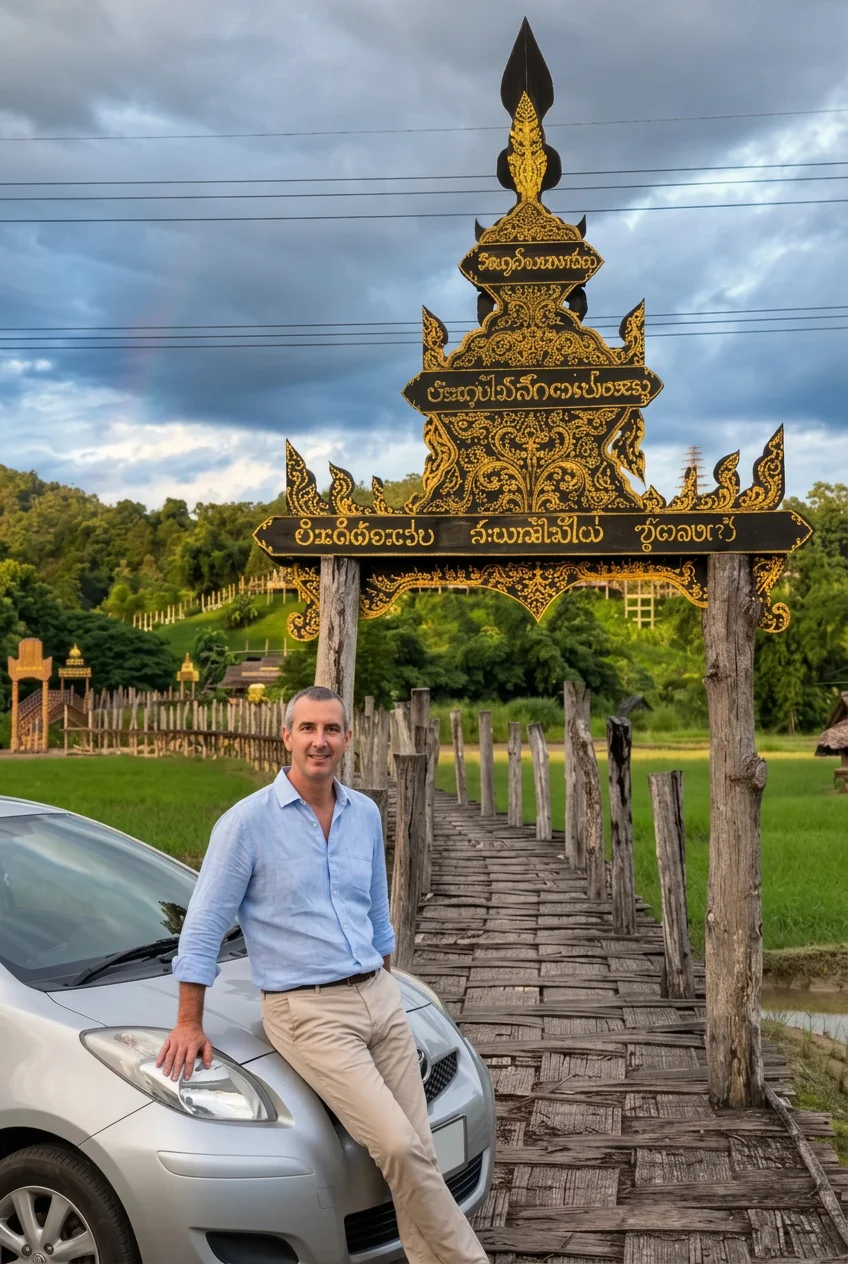
I ate instead at a small family cafe down near the bridge, but another disappointment was that I couldn’t cross the bamboo bridge across the rice fields to the monastery because part of it had been washed away.
The rain had also caused several landslides on the way to Ban Rak Thai, but fortunately the road was still open. However, for others heading up to this picturesque mountain village during the rainy season it’s worth checking the traffic reports on your devices.
The Lee Wine Ruk Thai Resort in a tea plantation.
I stayed at the Lee Wine Ruk Thai Resort overlooking the lake in Ban Rak Thai. I’d booked two nights in advance through Trip.com but ended up staying three because I was enjoying the cooler, fresh mountain air.
To my surprise, the staff asked me upon arrival to cancel my Trip.com reservation online and pay them directly in cash. I felt this was quite unethical, as it was clearly a tactic to dodge paying commission fees to the booking platform.
However, they refused to honour my online reservation, leaving me with no choice but to comply. It left me out of pocket for seven days while waiting for my refund, and it left a sour taste to see a seemingly reputable resort in Thailand resort to this kind of practice.
While the room itself was comfortable, the breakfast served at their lakeside restaurant was poor. The menu consisted solely of dumplings and noodles, so if you aren't a fan of Chinese-style breakfasts, you are better off booking a room-only rate.
The pretty view of the Ban Rak Thai lake at night.
Oddly enough, there wasn't any coffee served with breakfast, despite the fact that the same company owns the coffee shop right next door.
For lunch and dinner, dining options around Ban Rak Thai are fairly limited beyond boiled pork dishes, meaning two nights is plenty for most travellers. Personally, I didn't mind the extra day because I enjoyed diving into the village's fascinating history.
Ban Rak Thai was founded by Kuomintang (KMT) soldiers and their families who fled China's Yunnan province after losing the civil war to Chairman Mao's forces in 1949, giving the town a unique cultural heritage you won't find elsewhere in Thailand.
A Quieter, Low-Rise Pai Without the Hippies
After three nights in Ban Rak Thai, I headed back down to the main highway to continue my journey toward Pai. Along the way, I stopped at the two viewpoints mentioned in David’s article.
The panorama from the Ban Luk Kao Lam Viewpoint, looking out over the mountains of Myanmar, was truly spectacular.
Up until this point, traffic on the Mae Hong Son Loop had been quite light. However, the closer I got to Pai, the busier the road became with cars and motorbikes, as travellers based in Pai regularly make the short trip up to the viewpoints and back.
Some feline company with my breakfast at the Yoma Hotel.
In Pai, I stayed at the Yoma Hotel, which offers comfortable rooms with views stretching across the rice fields to the surrounding mountains. I paid their low-season rate of just 1,500 baht per night, including breakfast.
It turned out to be the best breakfast of my entire trip, featuring an American-style spread and good, fresh coffee. The hotel sits about 800 meters from the town center—an easy walk—though they also provide a free songthaew shuttle until midnight.
I had originally planned to stay for two nights, but I ended up staying for four. I spent my first evening strolling around to admire the local architecture. Buildings in Pai are restricted to a maximum height of three stories, giving the town a noticeably well-planned, low-rise charm.
Heavy rain kept me from visiting Pai Canyon, so I headed to the nearby Memorial Bridge and a hillside temple overlooking the Pai Valley instead. The views from the temple were breathtaking, looking like a tropical version of the meadows in the Swiss Alps.
The lovely, almost ‘alpine’, view across the Pai Valley.
I noticed plenty of travellers from Switzerland, Germany, and the Netherlands, alongside a smattering of expats up from Chiang Mai.
After reading David’s 2023 article, I had expected to find Pai packed with cannabis shops and a heavy hippie crowd. However, most of those dispensaries have disappeared following the Thai government's crackdown on recreational retail sales, leaving the town with a much quieter atmosphere.
There is no shortage of restaurants around town at very reasonable prices, including spots where you can get a decent glass of wine for 150 baht. Given how expensive wine usually is in Thailand, I found that to be a pleasant surprise.
I ate several evenings at Baanpai Restaurant, just across the road from Watsons. The Thai food was good, though noticeably milder than the southern Thai dishes I am used to. The chilies simply don't pack the same heat, so anyone accustomed to southern spice levels might find it a bit mild.
Practical Driving Tips and Returning to Chiang Mai
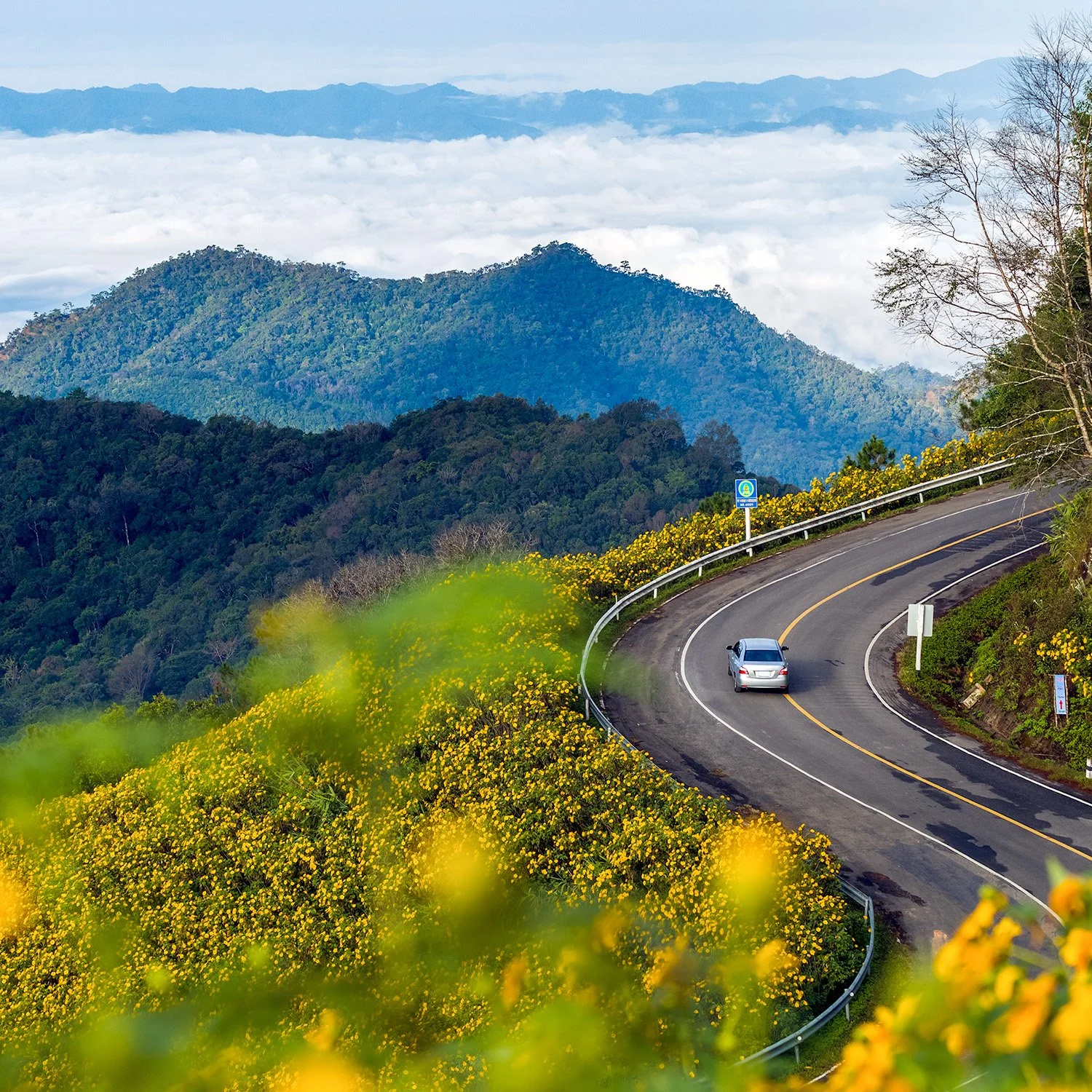
The final day of driving the Mae Hong Son Loop down toward Chiang Mai delivered the most amazing scenery of the entire trip.
One last but important tip about the drive: there are few petrol stations along the route so it’s important that you fill up every morning before leaving your overnight stop. Running out of fuel on one of those mountain passes would be a very expensive oversight.
View from the road between Pai and Chiang Mai.
While David completed his 2023 trip in four days, I chose to take things at a much more relaxed pace. I rented a car from Hertz through Trip.com, though the experience was nowhere near as smooth as renting from Hertz in other countries.
They required a 5,000 baht security deposit in cash only, and refused to return it when I dropped the car off—which is normally standard practice for cash deposits. Instead, they told me it would be transferred to my bank account within seven days, yet it actually took 27 days to arrive.
To make matters worse, they had the cheek to deduct a 500 baht "cash handling fee." Because of that, I wouldn't recommend using Hertz in Chiang Mai; you are better off booking with one of the local rental companies instead.
I drove a Toyota Yaris, which got the job done, though I found it noticeably underpowered on the steeper mountain climbs. If your budget allows, I strongly recommend spending a little extra for a vehicle with a larger engine.
The view from the upper floors of the 3 Sis Hotel.
Before starting the loop, I stayed at a lovely property in Chiang Mai called Ten Boutique Hotel near Wat Phra Singh though the hotel I chose upon my return was even better. Called The 3 Sis, it sits right in the heart of the Old Town directly opposite Wat Chedi Luang.
As the name suggests, it is run by three sisters who do a fantastic job of looking after their guests. Its location puts you within easy walking distance of everything worth seeing in the Old City, and I loved strolling the streets in the evening to soak up Chiang Mai's relaxed, multicultural atmosphere.
The renowned Sunday Night Walking Street Market takes place right outside the front doors, of the hotel transforming the whole neighbourhood into a lively cultural hub at the end of each week.
The hotel’s restaurant is called Poppy’s Kitchen and serves both international and authentic northern Thai cuisine. It’s worth a visit even if you are not staying there.
Entry to Wat Chedi Luang opposite the 3 Sis hotel.
During my stay, I also ate several times at the nearby LINK Cuisine, which has an excellent selection of Western and Thai dishes, amazing steaks, and a brilliant wine list.
After waiting more than 25 years to finally experience Thailand’s most scenic road trip, I can confidently say the Mae Hong Son Loop lived up to every expectation.
Even with a few rainy season detours and the car rental hiccup, taking the route slowly in a car proved to be an ideal way to soak in the region's mountain scenery, rich history, and welcoming towns.
Images: © Jonathan Gascoyne