Chandipur Beach Travel Guide: India’s Amazing Vanishing Ocean
If you are planning a trip to India and have Kolkata on your itinerary, and you are a traveller who enjoys getting off the beaten track, then a side-trip to Odisha state will provide a respite from the urban crowds and enable you to experience one of the natural wonders of Asia.
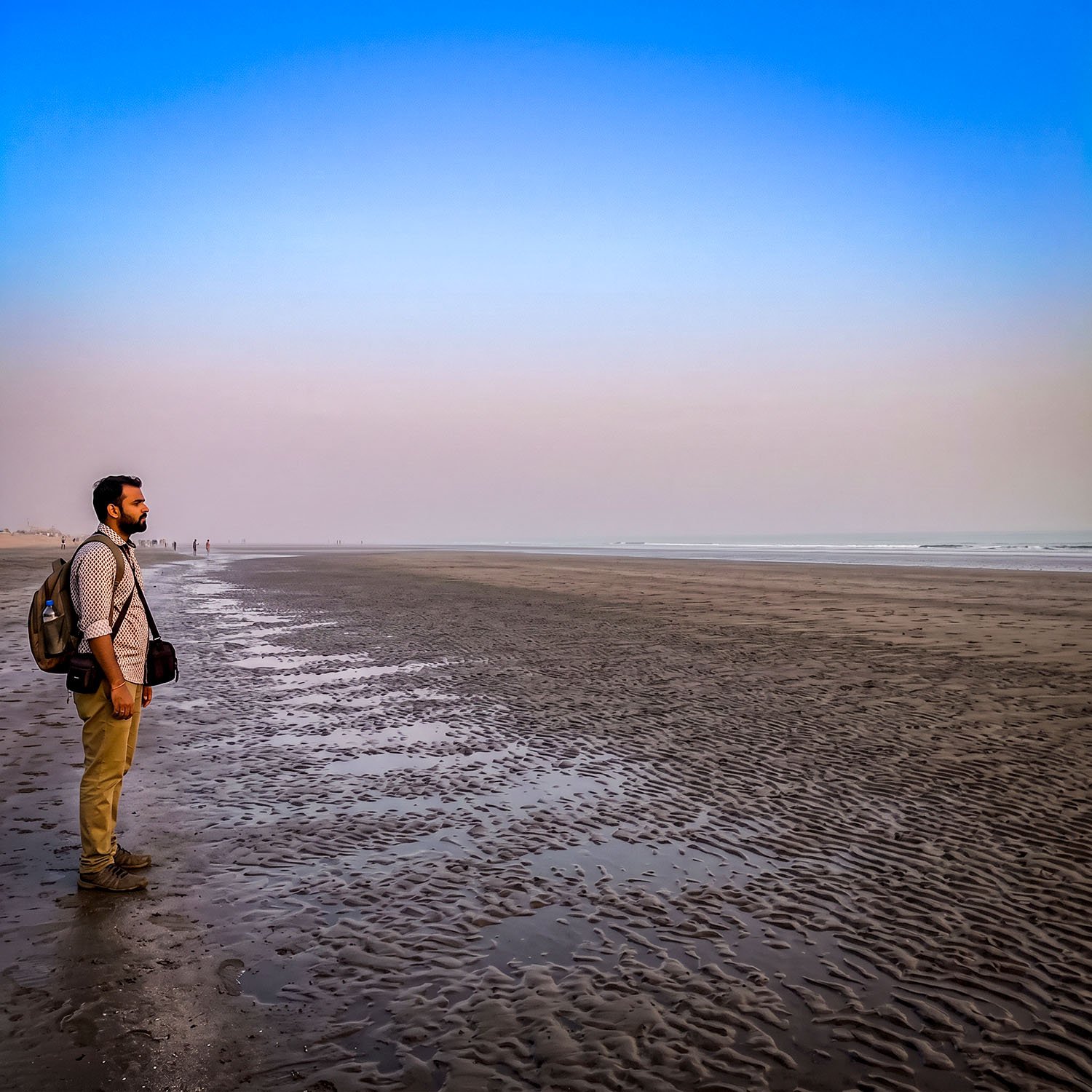
About 250km southwest of Kolkata is Chandipur Sea Beach on the Bay of Bengal where the ocean floor is so flat that the tide recedes 3-5km twice a day. It’s a phenomenon that is locally called ‘The Vanishing Sea’.
There is nowhere else in Asia where tides recede this far. There is a beach in South Korea where it happens a few times a year, but nowhere else where it occurs on a daily basis.
When the ocean ‘disappears’, what is left is a flat, slightly undulating hard sandy bed, somewhat muddy in places, but with many small tidal pools where marine life such as starfish and sea urchins can often be seen.
On the sand it is common to see many red crabs scurrying around and you may also be lucky to see one of the endangered horseshoe crabs that live along this quiet stretch of coastline.
A red crab on the exposed seabed of Chandipur Beach.
Photograph but don’t touch because it’s illegal to remove those horseshoe crabs. They are ancient creatures that have roamed coastal shores since before the dinosaur era. They are prized for their blue blood which contains a unique copper-based clotting agent sought after by medical laboratories.
While there is no official laboratory trade in India, an underground black market exists to sell the blood across borders. Poachers occasionally traffic the crabs across state lines during the night.
They are also smuggled for their meat (which some communities believe has aphrodisiac properties) or covertly sold to illegal buyers for extracting their biochemicals.
Although it can take six hours to reach Chandipur Beach by road, there is a more relaxing way to get there that will appeal to older independent travellers, and that’s by rail to the nearby city of Balasore (also called Baleshwar), which is only16 kilometres from the beach.
Express trains can get you there from Howrah Station in Kolkata in a little over three hours, and even the slower trains will still do the trip much faster than by road.
An Indian Railways express train at Howrah Station.
For the best comfort, book your tickets in the AC First Class (1AC) cabins. The 1AC class on Indian Railways gives you privacy, lots of leg space, clean washrooms, and a smooth, quiet trip.
It is perfect for older travellers or anyone who wants to avoid the loud crowds in standard train coaches. If 1AC tickets are sold out, the AC 2-Tier (2A) class is also a very good and comfortable choice.
When your train reaches Balasore station, walk out of the main gates to find local transport. You do not need to hire an expensive private taxi for this short distance.
The smartest way to travel from the station to the beach is to hire a local Toto (battery rickshaw) or an auto-rickshaw. Totos give you a nice, open-air ride through the country roads of Odisha right to your beach accommodation.
Always agree on the price before you sit inside. A fair price for a private ride from the train station to the beach is between ₹200 and ₹300. The final price will depend on your bargaining skills and how much luggage you have.
When I visited Chandipur last year to explore the coast, I was amazed at the total silence of the empty beach. It was so completely different from most other Indian beaches with loud music and pesky vendors.
The sea at Chandipur Beach is shallow even close to high tide.
Chandipur Beach is not a place for those seeking water sports or fast-paced adventure activities. Instead, it is a place to observe nature, travel slowly, and enjoy the local culture.
The best part about Chandipur is walking on the bare ocean floor during low tide. During my trip, I spent hours walking between the small water pools and observing the marine life. Getting to see all these sea creatures safely resting in their natural home is a rare and special treat.
Chandipur is a paradise for people who love eating seafood. The restaurants cook whatever fresh fish is caught that day. Since it is an active fishing town, the prawns, pomfret fish, and crabs are extremely fresh. They are also much cheaper here than in the big cities.
Most people eat at their hotels or at small food stalls near the beach gate. You should try the local Odisha style of cooking, which uses a tasty mustard paste and mild spices. If you have food allergies (especially to shrimp or crabs), tell the cooking staff know.
This is important because they put prawns into many mixed vegetable dishes too. You can also find fresh green coconuts everywhere on the beach road. Drinking coconut water is the best way to stay refreshed.
Locals ride a motorbike on the flat sand at low tide.
If you want to see something different from the beach on your trip, you can rent a car for a day trip to the nearby Nilagiri Hills. These hills are about 45 kilometres away from Chandipur Beach. There you can see:
Panchalingeswar Shrine: This beautiful temple is tucked inside the green hills. It has five sacred stones (lingams) with a natural water stream flowing over them. You have to climb a few stairs to reach it, so keep that in mind if you have tany mobility issues.
Sajanagarh Village: This very old village is just five kilometres away from Nilagiri. It is full of old ruins and gives you a great look into the deep history of the area.
Another worthwhile excursion is to the town of Remuna on the other side of Balasore. There, you can visit the Khirchora Gopinath Temple, which is a very calm and old temple from the 12th century.
To really enjoy everything that the Chandipur Sea Beach and surrounding areas have to offer, you should try to stay for at least two nights and three days.
Devotees at the stone lingams at the Panchalingeswar Shrine.
The best time to go to Chandipur is between October and early March. The winter months in Odisha have cool mornings and nice afternoons. This weather is perfect for long beach walks. Summer days (from April to June) are extremely hot and sweaty, making it uncomfortable to walk outside during the day.
Don’t forget your sun protection as there’s no shade on the beach, and mosquito repellent too as there may be a few around during the evenings.
Bring a small torch or flashlight too as it can be very dark away from the main roads with streetlights.
You’ll need some cash as well because although some hotels might take cards, smaller places, local Toto drivers, tea shops and food stalls only take cash (Indian Rupees).
For a deeper look into this specific trip, you can view my original field notes and photography from the Chandipur coastline on my own travel blog.
Images: © Bijoy Pal