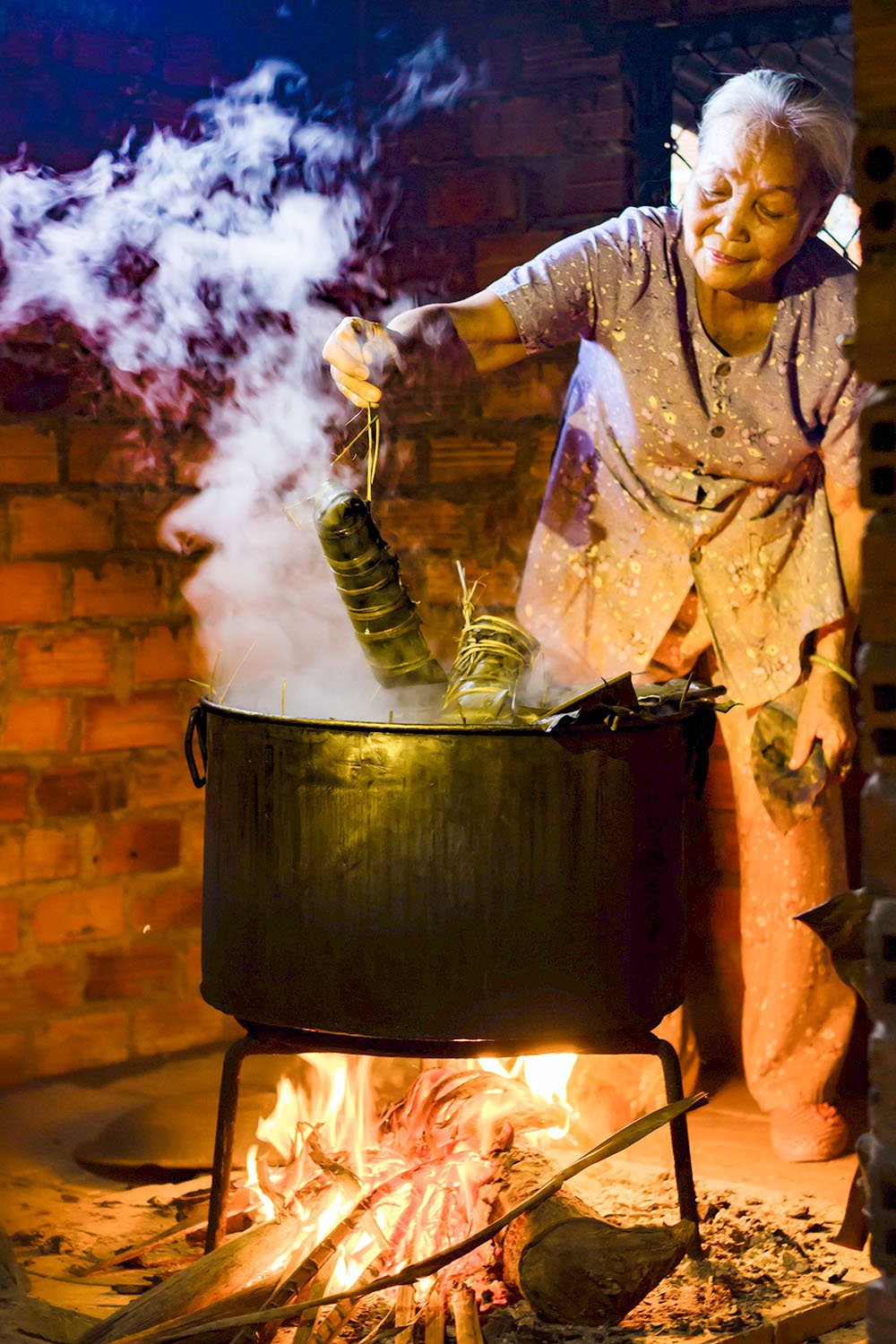
A Fragrant Start to Lunar New Year
Every year, just as the first hints of spring hit the air, my travel-loving heart starts to flutter with excitement – because I know it’s almost Lunar New Year.
This isn’t just any celebration: it’s the most vibrant, joyful, and downright delicious tradition I’ve ever experienced in my adventures across Asia.
The Magic of Tet Cakes
In Vietnam, this festival is known as Tet, and at its heart lies a culinary treasure – Tet cakes, or Bánh Chưng or Bánh Tét.
As someone always hungry for new experiences (and great food!) I can tell you these cakes are more than just food; they’re living symbols of tradition, unity, and hope, woven into the fabric of family life and cultural heritage.
Making Tet cakes is a whole of extended family affair.
My first experience was with a Vietnamese family. Picture a house buzzing with excitement in the days leading up to Tet. Kids darting around, sneaking tastes and sharing secrets as they sweep floors, while grandparents told old stories and polished the family altar. There’s laughter echoing down the hallways, the sweet scent of incense floating in the air, and everywhere you turn, there’s a sense of something wonderful about to happen.
The real star of the show? Tet cakes! For me, making them isn’t a chore – it’s a cherished adventure. Everyone gets involved, from the tiniest hands to the wisest elders. I loved how the kitchen transformed into a playground of sticky rice, creamy mung beans, juicy pork, and banana leaves. Together, we turned these humble ingredients into something extraordinary.
The Legend
Tet cakes are steeped in legend. The most famous tale is that of Prince Lang Liêu, who created Bánh Chưng to honour his ancestors and express gratitude for the earth's bounty. His square-shaped cake, representing the land, was chosen by the king as the most meaningful gift and thus became a staple of Tet.
Preparing the banana leaves for wrapping the cakes.
Bánh Tét, the cylindrical version, is popular in southern Vietnam and symbolises the sky. Both cakes embody the harmony between heaven and earth, a wish for prosperity and balance in the coming year.
The Tradition
Making Tet cakes is like throwing a party in your kitchen. Families – and sometimes the whole neighbourhood – pitch in, chattering and joking as they wash rice, soak beans, and marinate pork. There’s music, there’s gossip, and always at least one person who claims their wrapping style is the best. As a guest (and sometimes honorary family member), I’ve been lucky enough to join these lively kitchens, learning that the secret ingredient is always laughter.
I loved watching the banana leaves get snipped and shaped, ready to cradle the filling. Layer by layer, the cake came together – rice, beans, pork – each spoonful placed with loving care (and sometimes a little friendly competition among us). Then came the long hours of boiling, with the scent of banana leaves and savoury pork sneaking into every corner of the home, promising a mouthwatering feast ahead.
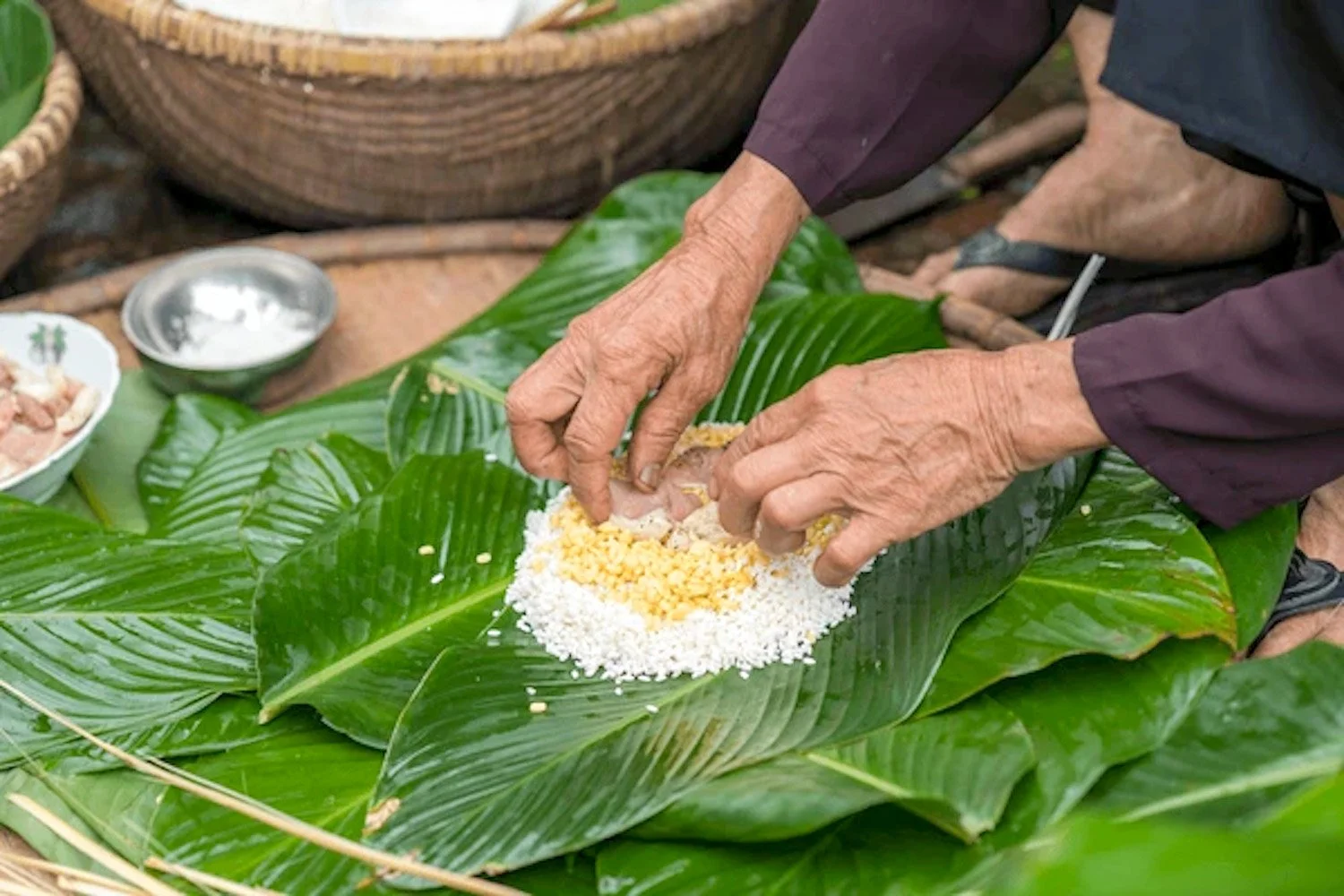
Mixing the ingredients which can be savoury or sweet.
During this time, stories are shared. Elders recount tales of past Tets, children ask questions, and everyone takes turns tending the pot. It’s a time for reflection, gratitude, and hope. The process is slow, but that’s the point – Tet cakes are not just food, they are a labour of love, a symbol of patience and togetherness.
The Meaning
For Asian families, Tet cakes represent more than sustenance. They are offerings to ancestors, tokens of respect and remembrance. On the Lunar New Year's Eve, families place Tet cakes on altars, surrounded by fruits, flowers, and incense. The cakes are also exchanged as gifts, a gesture of goodwill and blessing. To receive a Tet cake is to be welcomed into the fold, to share in the joy and fortune of the new year.
The Taste
And when it’s finally time to unwrap those green parcels – pure excitement erupts! Peeling back the banana leaves feels like opening a gift.
Spying the glossy, aromatic cake inside makes you lick your lips in anticipation of devouring it. That first bite is always unforgettable. Chewy sticky rice, silky mung beans, and tender succulent pork all melding together, with the banana leaf lending a hint of earthiness.
Savouring the delicious taste of a Tet cake.
It’s sweet, savoury, and melt-in-my-mouth magic that makes me want to go back for seconds (or thirds).
For visitors (like me, on my first Tet), tasting Tet cake is a golden ticket to experience the warmth of Asian hospitality and savour a dish crafted with care and tradition. Each bite tells a story, connecting you to generations past and present – and making you want to come back for more.
The Celebration
Tet is a time of renewal, a chance to start fresh, reconnect with loved ones, and exchange wishes for health and happiness. Tet cakes are at the centre of this celebration. The cakes are sliced and served, sometimes with pickled vegetables or fish sauce, always with a sense of gratitude.
Guests and newcomers are always greeted like old friends. Sharing Tet cake isn’t just about food – it’s about opening your home, heart, and culture to someone new. With every slice, you’re making memories, forging connections, and spreading a little bit of joy.
The Invitation
If you ever get the chance to join a Tet celebration, jump right in – don’t be shy! Grab a slice of cake, listen to the stories, and soak up the warmth of the occasion. You’ll discover unbelievable flavours, traditions, and a sense of belonging that’s as sweet as the cake itself. It’s not just a meal – it’s a memory in the making.
Tet cakes wrapped and ready for gift-giving.
Tet cakes are a testament to the power of food to unite, to comfort, and to inspire. They are a reminder that the best things in life are made with love, shared with others, and savoured slowly.
So, as Lunar New Year approaches, let the spirit of Tet cakes inspire you. Gather your friends and family, try your hand at making Bánh Chưng or Bánh Tét, and share the joy of tradition. Whether you’re Asian or simply a curious visitor, Tet cakes offer a taste of something truly special – a celebration of heritage, hope, and togetherness.
Header image: © Tiểu Bảo. All other images: © Nannette Holliday